
Engine
Finding code in the app
App code is obfuscated and renamed every release, so a patch never refers to a method by name. It describes the method: the strings it loads, its return type, what it calls. Reseam finds the one method matching the description. The description is a target; a target can be a method, a class, a field, or one instruction.
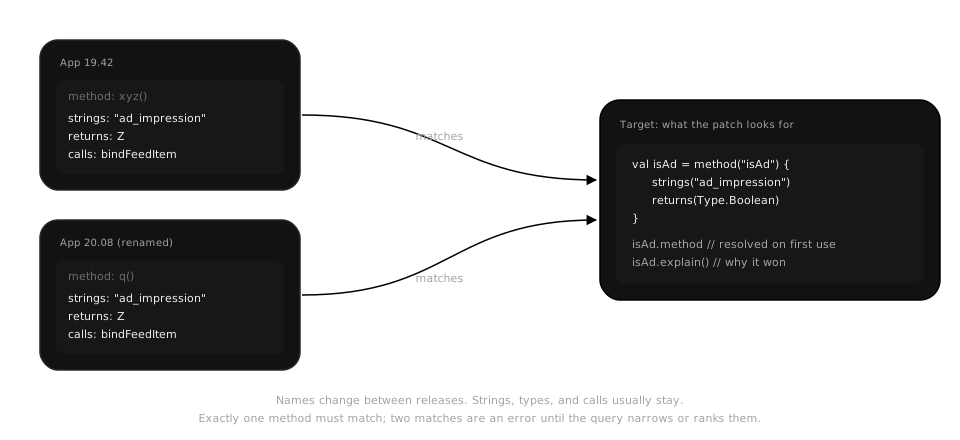
Targets are top-level values. They resolve the first time a patch uses them and stay cached for that patch. Types are accepted as descriptors (Ljava/lang/String;), dotted names (java.lang.String), or Type constants.
Methods and classes
val isAd = method("isAd") {
    strings("ad_impression")
    returns(Type.Boolean)
}

val mainActivity = klass("com.example.app.MainActivity")
val onResume = mainActivity.method("onResume") { params() }
val prefs = mainActivity.fieldOfType("android.content.SharedPreferences")

val adLoaderClass = klass("adLoaderClass") {
    strings("ad_unit_id", "ad_request_failed")
}
klass(name) is a known class; klass(label) { } is a query. A class target scopes method, methods, field, and fieldOfType. The full constraint list is in the reference.
Exactly one method must match. More than one is an error listing the candidates, unless rankBy produces a single best score or first() is set. methods { } returns every match instead.
How a query searches
The engine indexes the app once per patch run. A query starts from the constraints that select fewest candidates and checks the rest against them:
inClass,calls,calledBy,strings,literalsseed from the indexes, smallest first.- Failing those,
name. - Failing those,
returns,params,hasParam,opcode, which match thousands of methods in a large app. - With nothing selective, every method is a candidate.
Warning
Give every query a string, a literal, a class, or a call relationship. method { returns(Type.Boolean); paramCount(1) } considers most of the app and finds several matches. first() then picks whichever sorts first by descriptor, a different method after the next obfuscation pass; use it only for interchangeable matches. methodTarget { } and loops over bytecode.classes are unindexed hand scans: last resort, kept narrow.
Points
A point is one instruction in a method:
val premiumCheck = mainActivity
    .method("onCreate") { strings("premium_status") }
    .point { string("premium_status") }
    .previous { invokeStatic { params(USER_SESSION); returns(Type.Boolean) } }
    .callee()
point { } matches the first instruction satisfying the block; then { } continues a sequence. previous { } and next { } walk from it, callee() and field() turn it back into a method or field target, captureAs("name") saves the register it writes for capture("name") in later code.
Warning
A point is an instruction index. Inserting code above it shifts the instruction. Emit at points before emitting at the method's entry, or resolve every point first (captureAs, before, or reading index resolves it).
Custom targets
appEntry is onCreate() of the app's Application class, added if missing. methodTarget, classTarget, and fieldTarget take a block with the runtime as receiver for lookups no query expresses:
val adStateClass = classTarget("adStateClass") {
    bytecode.findClass(adCounterField.owner) ?: error("ad state class missing")
}
Debugging a target
A failed target prints how many candidates were considered, which constraint seeded and rejected them, and the nearest misses with the reason each lost. A resolved target is logged with level=debug and its winner; target.explain() returns the same report inside execute.
returns("boolean")is not a type;Type.Booleanor"Z"is.stringsmatches whole constants. Onlypoint { stringContains(...) }matches parts.class mismatchon every candidate means theinClasstarget resolved to the wrong class.
Next: Changing methods.