
API

Architecture

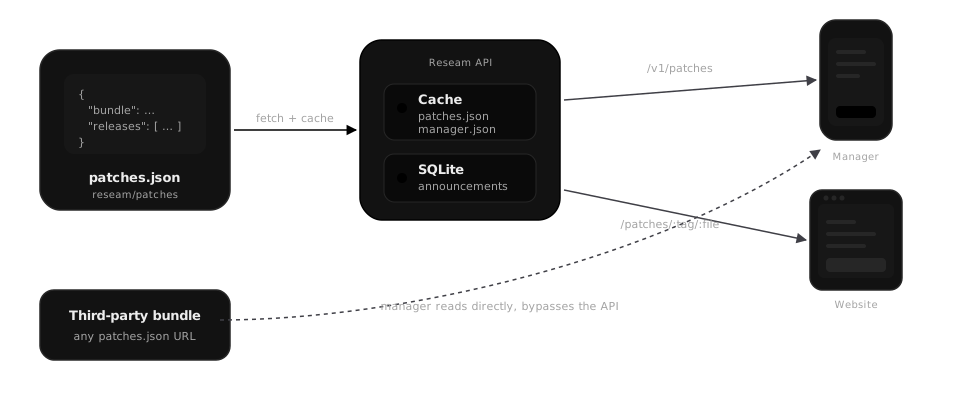
Architecture diagram: the Reseam API fetches and caches one configured patches.json from reseam/patches, serves /v1/patches and /patches/:tag/:file to Manager and Website, and stores announcements in SQLite. Third-party bundles bypass the API; the manager reads their patches.json URLs directly.

Scope

The Reseam API is a single-bundle proxy. One instance fronts one bundle, the official one configured via PATCHES_URL. Third-party bundles do not go through it. The manager reads their patches.json URLs directly.

Three actors

  1. Upstream. The reseam/patches repo publishes a signed .reseam archive and a patches.json alongside it. This is the one source the API is pointed at.
  2. API. Fetches that patches.json on demand, caches it, and serves stable endpoints under *.reseam.app. Also serves manager.json and stores announcements.
  3. Consumers. The website reads from the API for the official bundle. Reseam Manager does the same, and also reads third-party patches.json URLs directly.

What the API adds

  • Stable URLs. Bundles move. Release hosts change tags, authors rehost, servers go down. The API gives clients a single place to look. If the upstream moves, only the API's config changes.
  • Caching. The upstream is usually a release asset on a git forge. A thousand phones hitting that at the same minute is rude. The API caches for CACHE_TTL seconds (default 5 minutes) and sends proper ETag and Cache-Control headers.
  • One origin for CORS. Clients only need to trust *.reseam.app.

Non-goals

  • Not a bundle builder. The reseam CLI builds bundles.
  • Not a patch host. The redirect routes hand off to whoever hosts the release.
  • Not a user system. There are no user accounts and no per-client data.
Reseam © 2026 Reseam Team